
F1 Terms You’ve Always Wanted To Know – Part 1
Your submissions to our explanations, the first part of our fan-built glossary...

Published
13 AUG 2025
Est. reading time
4 min
Last week, we asked you to send us the Formula 1 terms you’ve always wanted explained.
You responded in your hundreds – from the fundamentals to the kind of stuff that would make a Race Engineer proud.
We’re kicking things off with Part 1 of our fan-powered glossary. These are some of the most popular requests so far (and yes, you can still send more in at the bottom of this article).
Overcut vs Undercut
Joy T, Erin W, Candice B, Aimi F, Edu & More
One of the hottest topics in race strategy – and one of the most-requested terms from you.
An overcut is a strategy that requires a driver to pass the car it is following by pitting later than them, utilising the clean air that becomes available to set faster lap times before pitting themselves and coming out in front.
An undercut is the opposite: pit earlier than your rival, get fresh tyres on, push hard, and hope that when they pit later, you’ve already jumped ahead.
ERS
Victor K, Lilly-Rose M
ERS stands for Energy Recovery System – a clever piece of technology that harnesses the wasted kinetic energy from the brakes, plus the wasted heat energy from the turbocharger, to provide added power.
An MGU-K (Motor Generator Unit - Kinetic) and MGU-H (Motor Generator Unit - Heat) are found on all current Formula 1 cars and are both ERS. The MGU-H will be removed as part of the new 2026 regulations.
Lift and Coast (LICO)
Maheeka B, Leslie J, Ashlie M & More
F1 drivers might be asked to ‘lift and coast’ for a variety of reasons, such as fuel saving, tyre management or brake management. The driver lifts off the throttle earlier than usual before a corner and lets the car roll (or “coast”) before braking. Drivers in race conditions may be given specific corners on the circuit in which to lift and coast, typically in heavier braking zones found at the end of long straights.
Parc Fermé
Emilia M, Amanda Jo M
This is a French term meaning ‘closed park’. It’s an area controlled by the FIA where cars head after Qualifying or Sprint Qualifying to ensure no maintenance or set-up changes are made ahead of a Grand Prix or Sprint.
Dirty Air
Hodan A, Tomileye F
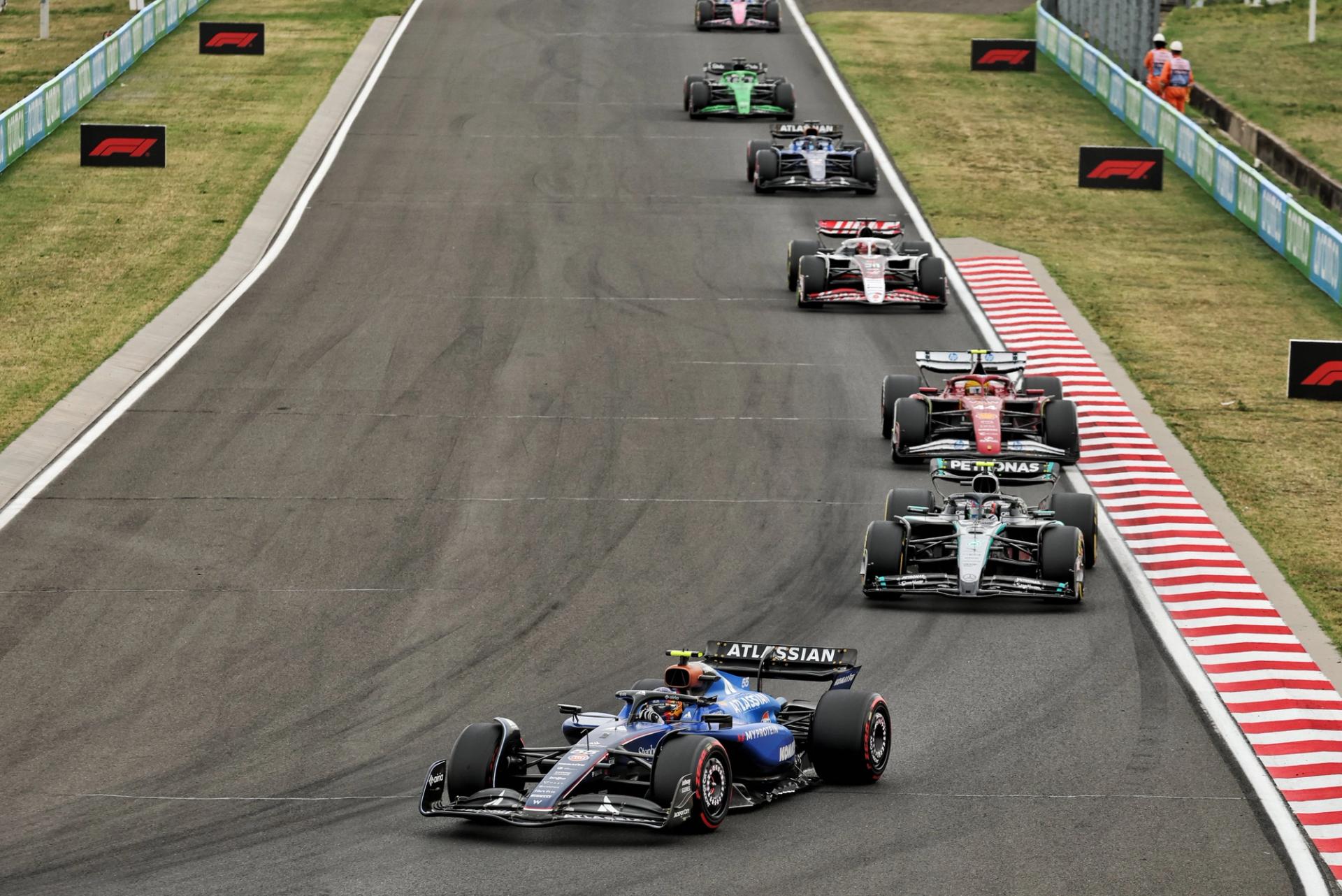
Carlos and Alex in a train of cars at the Hungarian GP
Dirty air is the turbulent airflow that follows a car as it punches a hole in the air at high speed. If you’re following a competitor closely, that disturbed air reduces your downforce, making it harder to corner quickly. It’s one of the main reasons drivers want to be within DRS range and pass quickly, without getting stuck in a traffic jam.
The Apex
Norene M, Mayitzia AF
The apex is the innermost point of the racing line through a corner – the part drivers will aim to clip before heading back out towards the exit of the turn. Hit it correctly and you’ll carry maximum speed onto the straight, giving you the best lap time. Miss it, and you’ll either be too slow or too wide. Some longer radius corners might have a double apex, such as the first turn in Shanghai.
Bottoming
Johanna H
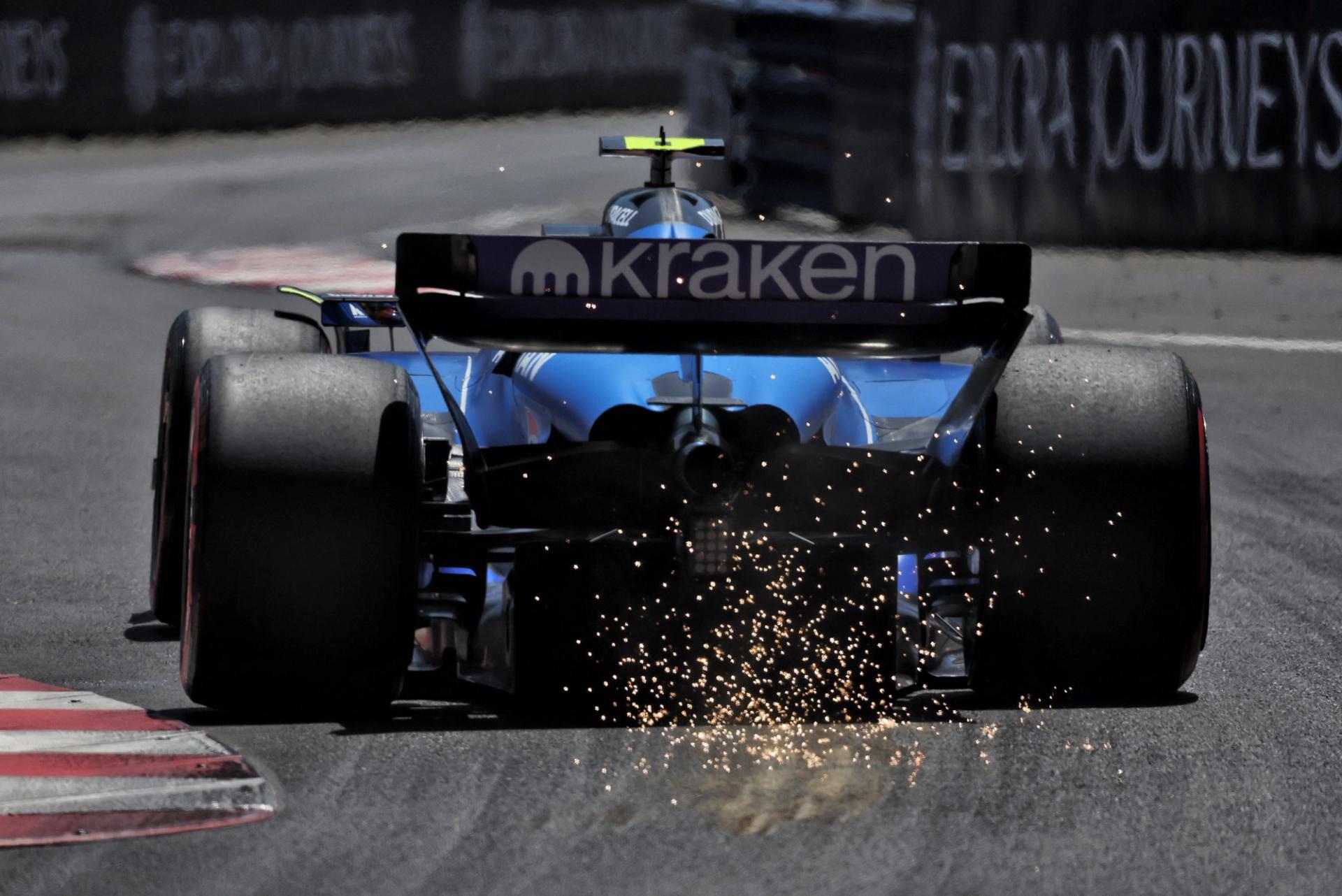
Sparking through the swimming pool section in Monaco
This is when the underside of an F1 car scrapes along the track surface – usually on a bump, kerb, or under heavy compression at high speed. You might hear it as a harsh “thud” when watching onboard footage, or see sparks flying. It’s not great for comfort (just ask the driver’s spine), but in moderation it’s a normal part of running a car low to the ground for maximum performance.
Box Box Box
Sukhmani K
Not a request for a present – it’s a pit stop instruction. “Box” is the term teams use to tell their drivers to come in, and saying it two or three times just makes sure there’s no confusion over the radio.
But, why box? Well it refers to the pit box, the area drivers will stop in the pit lane. OK – why not say pit or pit stop? Box is a much clearer word for drivers and engineers to hear over the radio.
Got a term you want us to cover next? Fill out the form below and you might just see it explained in Part 2.
Submit F1 Terms You’ve Always Wanted To Know
Tell us the term you'd like to learn more about below...
Submit Now

Latest


Related Tags
Trending
Corporate

© 2026 The Williams Group, under licence to Williams IP Holdings LLC
Williams Grand Prix Engineering Limited is a company registered in England and Wales under company number 1297497.
Its registered office is at Grove, Wantage, Oxfordshire, OX12 0DQ
Powered By
